
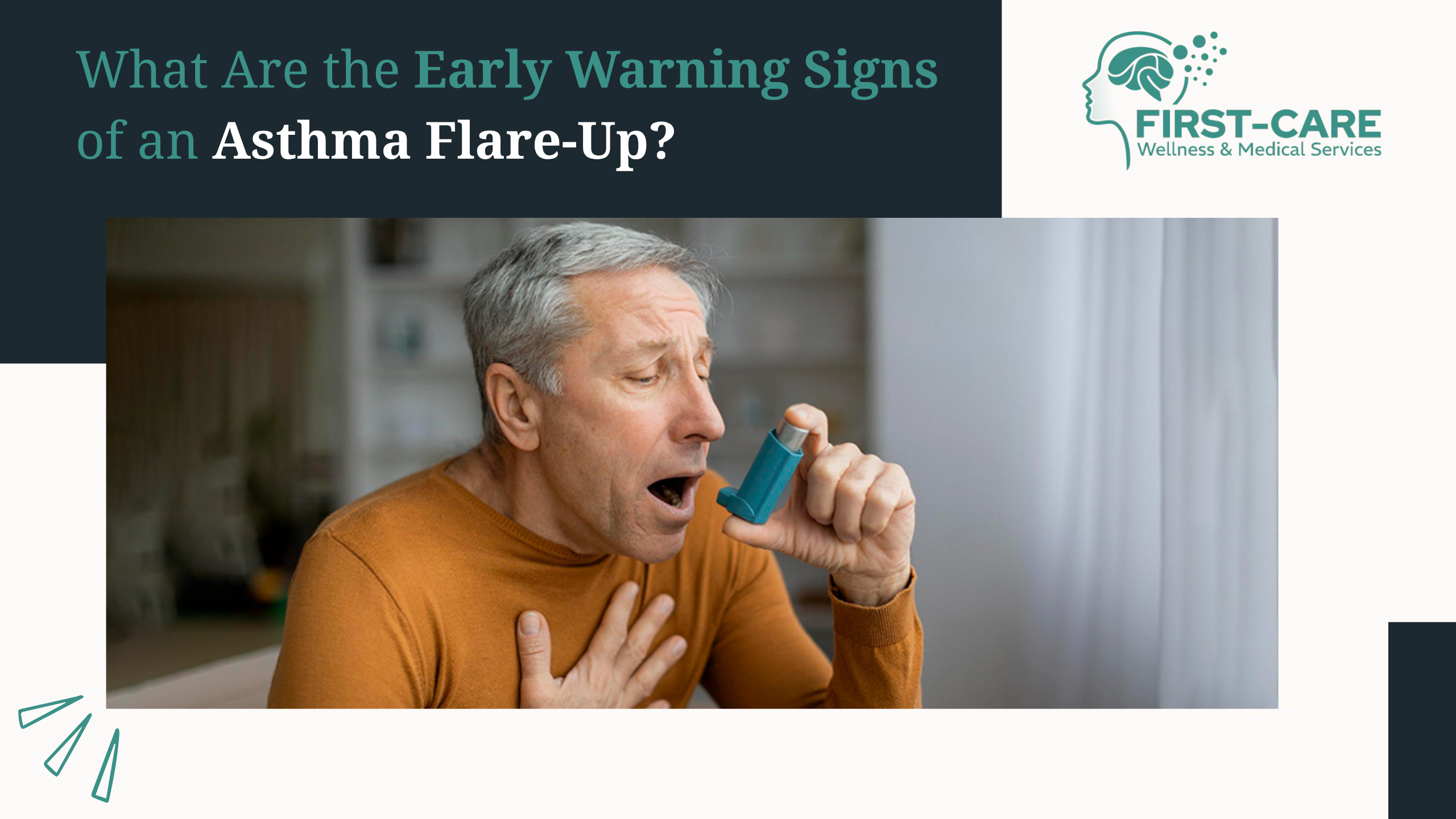
Asthma is a health problem that affects the lungs. It can make it hard to breathe sometimes. When your breathing gets worse, it is called an asthma flare-up. A flare-up can start slowly. It can happen over a few days. The appearance of it sometimes goes undetected at first.
Learning your body’s clues is important. These clues, called early warning signs, help you stop problems before they start and stay safe.
At First-Care Wellness & Medical Services, we focus on helping patients notice these early changes and manage asthma simply and steadily.
Below, we will discuss early warning signs of asthma flare-ups and how regular care and check-ups can help manage asthma for better daily breathing.
Early Warning Signs of an Asthma Flare-Up
The early signs of asthma are important. They often appear before a full flare-up begins. Recognizing them early can help prevent breathing problems from getting worse.
- Mild Shortness of Breath
One of the first signs is feeling slightly out of breath. This can occur during sleep or when engaged in quiet activities such as talking or walking. You might have difficulty breathing fully.
This symptom can present at any time, but should not be overlooked.
- Frequent Coughing, Especially at Night
One of the early signs is a persistent, relapsing cough, “a constant cough that goes away and returns”. A cough is more noticeable at night or in the early morning.
This cough does not initially have to be severe, but if not treated early, it can gradually get worse over time.
- Tight Feeling in the Chest
Others experience a sensation as if they are having a heart attack. It could seem more weighty or tight even if they are not performing physical work.
This sensation occurs when the lungs make it more difficult to breathe.
- Slight Wheezing Sounds
‘Wheezing’ is when people make wheezing sounds. It can frequently occur during the exhale.
Just a slight “wheezing” noise could be an early sign that the airways are starting to block.
- Getting Tired Faster Than Usual
When breathing is not normal, the body works harder. This can cause tiredness, even after small activities.
People may feel weak or low in energy without any clear reason.
- Trouble Sleeping Well
Asthma can get worse at night.
You may:
- Wake up coughing
- Feel short of breath
- Not sleep well
Poor sleep can make you feel more tired the next day.
Changes in Your Peak Flow Numbers
If you use a peak flow meter, it can tell you a lot about your lungs. This is a small plastic tube that you blow into. It measures how hard you can push air out.
- Good Numbers: Your numbers are high and in your normal zone.
- Warning Numbers: Your numbers start to drop lower than usual.
- Action Needed: If your numbers keep falling, your tubes are getting narrow.
You can use this tool on a daily basis to visually notice a flare-up before it’s physical. It may alert you clearly and allow you to take appropriate action.
Why It Is Important to Notice Early Signs
If you notice early signs, you can:
- Stop asthma from getting worse
- Breathe more easily
- Avoid emergency visits
- Stay active at school or home
Common Triggers that Can Make Asthma Worse
Asthma symptoms may be produced from various reasons. Knowing your triggers can help prevent flare-ups.
Some common triggers include:
- Dust and dirt
- Smoke
- Strong smells like perfume
- Cold air
- Exercise without warm-up
- Allergies like pollen or pets
- Colds or flu
Everyone is different. What affects one person may not affect another.
What to Do When You Notice the Signs
Noticing the signs is the first step. The next step is knowing how to get help. You should follow your personal asthma action plan. This plan is a paper that tells you exactly what medicines to take when you feel sick.
It is important to use your rescue inhaler if your plan tells you to. This medication opens up your breathing tubes rapidly. It is also advised to sit down, remain calm and take slow breaths.
The Role of Regular Medical Check-Ups
Ongoing care is very important for asthma management. Regular visits help doctors see how well the treatment is working.
First-Care Wellness & Medical Services supports patients with chronic diseases like asthma. We offer regular check-ins and clear advice.
Our providers work closely with patients to:
- Track breathing changes over time
- Adjust medications if needed
- Teach proper inhaler use
- Help prevent future flare-ups
This care helps patients understand and manage their condition.
When to Get Help Right Away
Get medical help if:
- Breathing becomes very hard
- Lips or face look blue or gray
- Inhaler is not helping
- You cannot speak full sentences
- Chest feels very tight
Do not wait if symptoms are severe.
Final Thoughts
Asthma flare-ups typically come with warning signs such as coughing, fatigue, or chest tightness. Recognizing these early indicators can help prevent serious attacks.
With proper care, regular check-ups, and healthy habits, individuals with asthma can enjoy active lives.
If you or a family member has asthma, don’t wait for symptoms to escalate. Continuous support is vital.
Contact First-Care Wellness & Medical Services for tailored care and advice to manage asthma effectively.
FAQs
Can asthma flare-ups happen suddenly?
Yes, but in many cases, symptoms build up slowly over hours or days before an attack.
Is wheezing always present in asthma?
No, some people may have coughing or chest tightness without noticeable wheezing.