
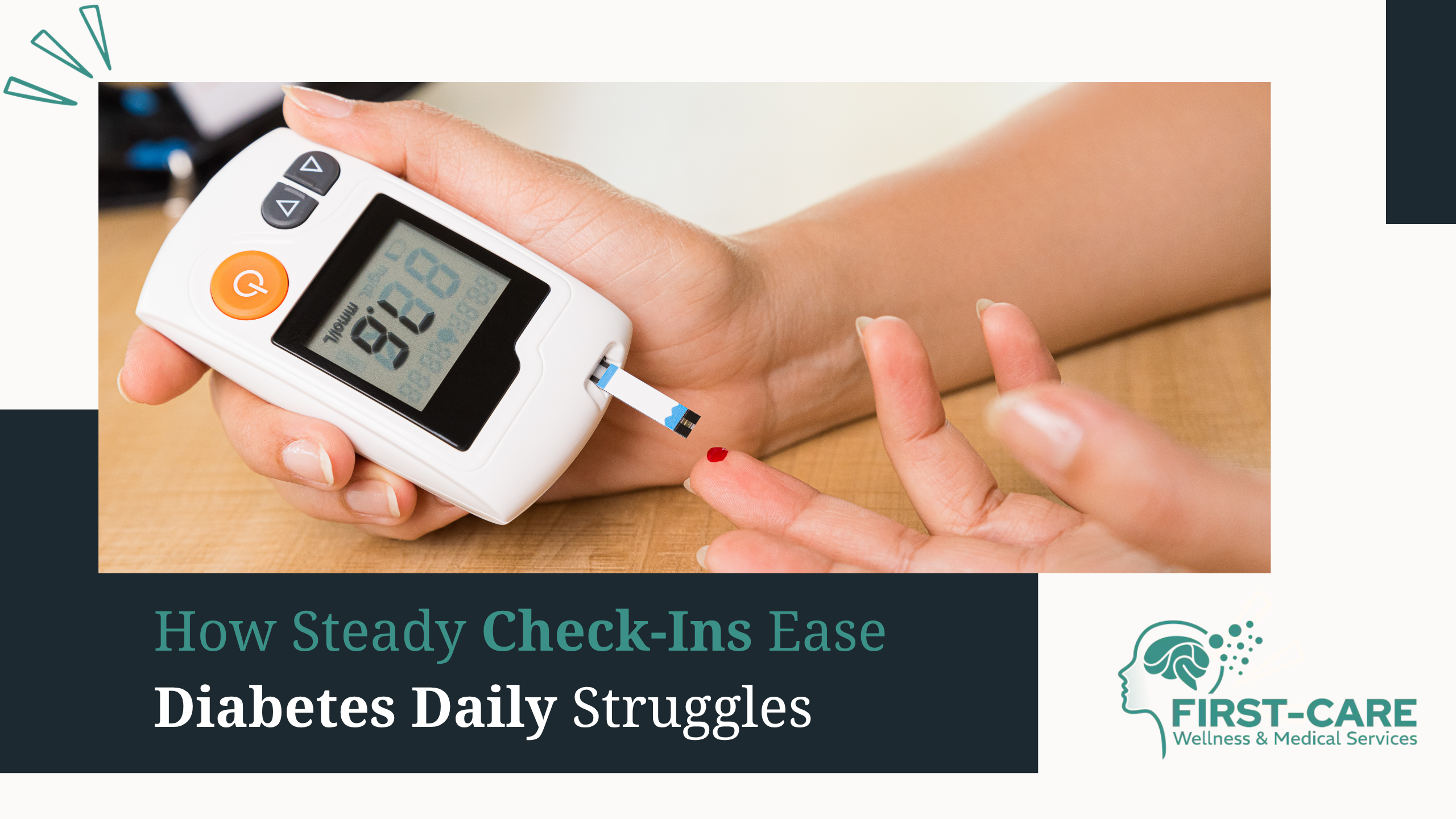
Living with diabetes can feel hard at times. Some days go well. Other days bring worry, stress and tiredness. Blood sugar can change fast. Meals, sleep, movement and medicine all play a part. That is why steady check-ins matter so much.
A regular care plan can make daily life feel more stable. It gives people a clear path to follow. It also helps catch changes early, before they turn into bigger problems.
At First-Care Wellness & Medical Services, our Chronic Disease Management helps patients stay on track with support, simple guidance and reliable monitoring.
This kind of care is not about pressure. It is about support. It gives people the tools they need to feel more in control of their health.
Why Diabetes Needs Steady Care
Diabetes is not a one-time problem. It is a long-term condition that needs attention every day. Blood sugar may rise or fall because of food, stress, sickness, or missed medicine. Sometimes the changes are small. Sometimes they are serious.
That is why regular care visits are so helpful. They give patients and providers a chance to talk about what is working and what is not. They also help people understand their health better.
When care is steady, diabetes feels less confusing. People know what to watch for. They know when to ask questions. They know when something needs to change.
What Steady Check-Ins Do
Steady check-ins do more than fill a calendar. They help build a safer and calmer routine for daily life.
During these visits, providers can:
- Review blood sugar patterns
- Talk about medicine use
- Check symptoms and side effects
- Adjust treatment when needed
- Share simple steps for better daily care
These visits help patients stay informed. They also help providers spot changes early. That can lower the chance of serious trouble later.
At First-Care Wellness & Medical Services, each visit is centered on practical help. Our goal is to make health responsibilities feel easier, not harder.
Daily Life with Diabetes Can Feel Heavy
Many people with diabetes do a lot every day. They may check blood sugar. They may take medicine. They may think about meals, snacks, water and exercise. They may also worry about what their numbers mean.
That can feel tiring.
Some people feel fine in the morning and drained by afternoon. Some feel nervous before meals. Some are not sure if a headache, shakiness, or thirst is a warning sign. These daily struggles can add up.
Steady check-ins help lighten that load. They give patients a place to ask questions and get clear answers. They also help people feel less alone.
How Steady Check-Ins Ease Diabetes Daily Struggles?
A good diabetes care plan is not guesswork. It is built step by step. Steady check-ins help make that possible.
When a patient comes in often enough, the provider can see the full picture. Small changes can be noticed early.
A blood sugar cycle that seems minor today may be a warning sign next month.
A medicine that once worked well may need a new dose. A meal plan may need a small change.
This kind of care helps with:
Better Blood Sugar Tracking
Blood sugar can change for many reasons. Steady check-ins help connect the dots. A patient may learn that certain foods raise sugar more than expected. They may also see that stress or poor sleep affects their numbers.
Safer Medicine Use
Medicine is an important part of diabetes care for many people. But medicine must be used the right way.
Steady check-ins help make sure it is still a good fit. Providers can ask about missed doses, side effects, or trouble remembering a schedule.
Early Problem Finding
Some diabetes problems grow slowly. A patient may not notice them at first. But a provider may see signs during a visit. Early care can help prevent bigger issues with the feet, eyes, kidneys, or nerves.
More Confidence
When people understand their plan, they often feel surer of themselves. They know what to do when blood sugar is high or low. They know when to call for help. That confidence can make a big difference in daily life.
The Value of Clear Guidance
Many people do better when health advice is simple and clear. Long or hard words can make care feel confusing. That is why good support should be easy to follow.
At First-Care Wellness & Medical Services, patients receive clear direction that lines up with clinical standards. Our team helps patients with diabetes stick to their plan, reducing risks and supporting overall wellness.
Clear guidance may include:
- When to check blood sugar
- How to take medicine
- What warning signs to watch for
- How food choices affect blood sugar
- When to return for follow-up care
When people understand their care plan, they are more likely to follow it. That often leads to better results over time.
What Patients Gain from Steady Check-Ins
Patients who keep up with regular care may notice many benefits over time.
They may feel:
- Less unsure about daily choices
- More able to follow their plan
- More ready to handle blood sugar changes
- More aware of warning signs
- More supported by their care team
They may also have a better understanding of how their habits affect their health. That knowledge can lead to smarter choices and better results.
Even when diabetes is still a challenge, regular care can make it feel more manageable.
At First-Care Wellness & Medical Services, each patient receives support that is meant to be practical and manageable. Our aim is to help people stay consistent, stay informed and stay ready.
A Team Approach Makes Care Stronger
Diabetes care works best when patients and providers work together. The patient knows their daily life best. The provider brings medical knowledge and guidance. Together, they can build a plan that makes sense.
This team approach helps people stay on course. It also makes it easier to update care when needed. If something is not working, it can be discussed. If a plan needs to change, that can happen too.
That is one reason steady appointments are so useful. They keep the care team connected and aware.
When To Schedule a Visit
A visit should not wait until something feels very wrong. Regular follow-up care is helpful even when things seem stable. It can also be useful if:
- Blood sugar numbers are changing
- Medicine is hard to manage
- New symptoms appear
- You feel tired, thirsty, or shaky often
- You need help staying on track
If any of these sound familiar, it may be time for a check-in. Small changes today can help prevent bigger problems later.
Final Thoughts
Diabetes can bring daily stress, but it does not have to take over life.
Steady check-ins can make a real difference. They help people understand their condition, follow their plan and catch changes early. They also bring comfort through regular support and clear guidance.
At First-Care Wellness & Medical Services, our Chronic Disease Management in Glen Burnie, Maryland is built to help patients live with more confidence and less confusion. With reliable monitoring, practical care and a team that listens, patients can feel more prepared for each day.
Take The Next Step Today
Do not wait for small changes to become big problems.
Reach out to First-Care Wellness & Medical Services to schedule your visit, ask questions and get the support you need for diabetes care.
Book your appointment today and take a steady step toward better health.
FAQs
Why are steady check-ins important?
Regular visits help catch changes early. They also help patients stay informed and avoid complications.
What happens during a diabetes check-in?
A provider may review symptoms, talk about blood sugar, check medicine use and discuss next steps for care.
Who can benefit from this type of care?
Anyone living with diabetes can benefit. It is especially helpful for people who want clear guidance and steady support.